Study · Lighting
Wooded foothills, after dusk
Night plane
Warm rooms, sheltered terraces, and a garden that comes into its own after dusk. A study of light, shadow, and the places we gather.
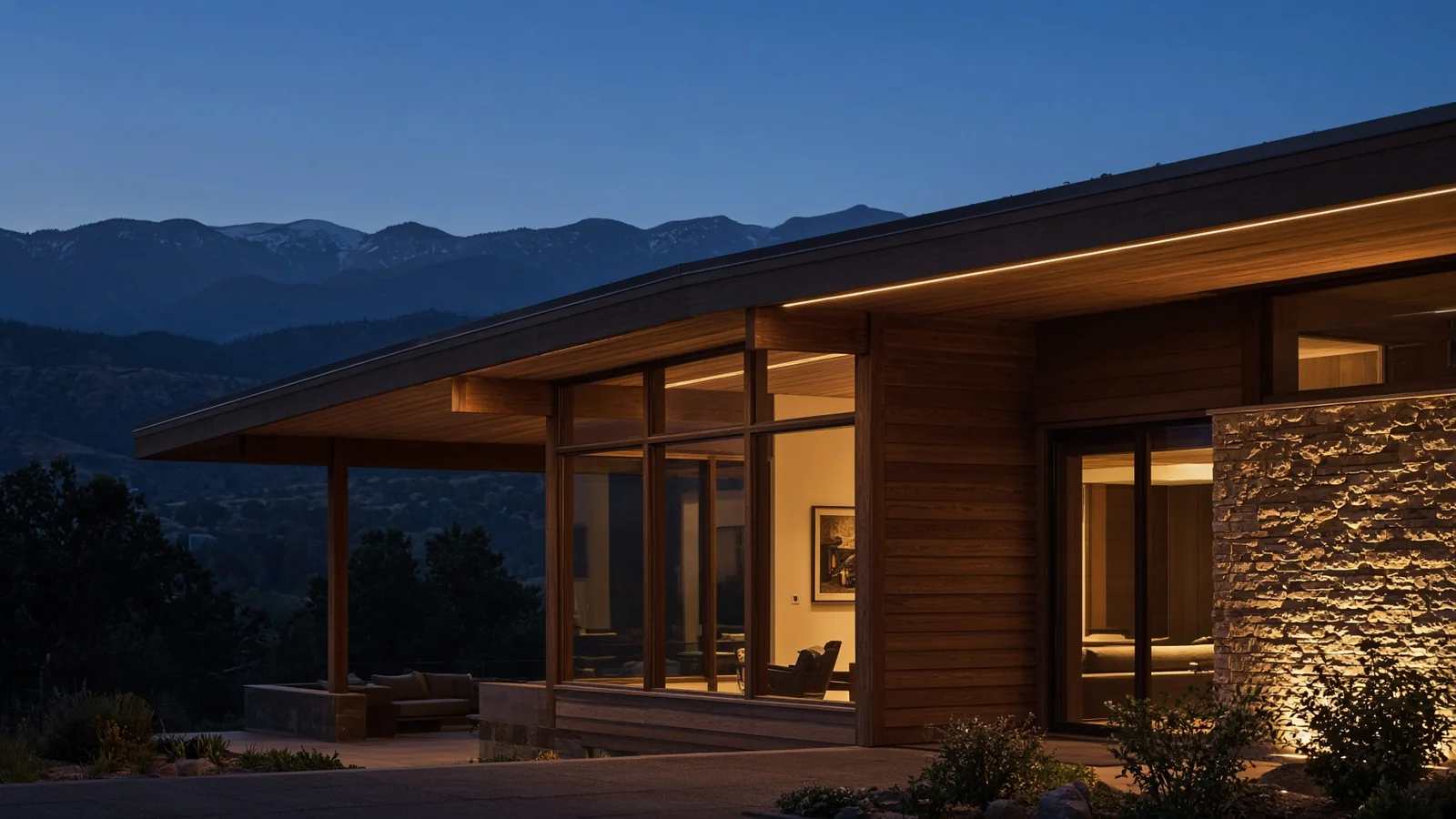
The house after sunset.
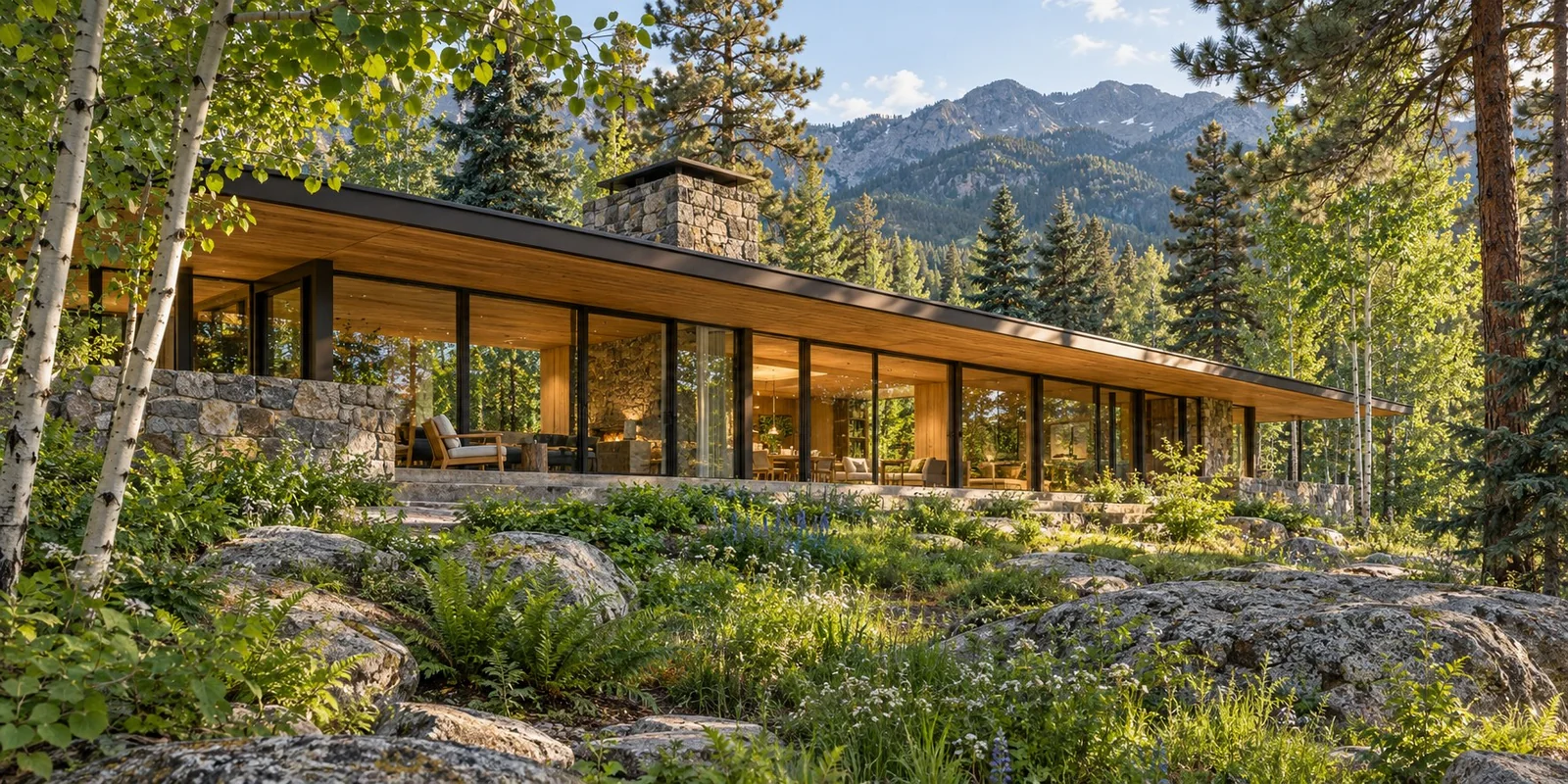
Night Plane explores how a mid-century home changes as daylight recedes. The long roof becomes a line against the evening sky; warm rooms sit within the darker landscape. The aim is to make the house welcoming and the garden legible while preserving the depth of the night. Lighting begins with the place and the way people use it: arriving home, sharing a meal, reading, or stepping outside for a few quiet minutes.
Give the roofline room to settle.
A deep eave already gives the house a strong horizontal presence. A restrained wash beneath it can reveal the timber and the shelter it provides, with the light source tucked out of direct view. Stone can catch a little grazing light where its texture matters. We look for a few connected surfaces rather than outlining every edge, allowing the architecture to remain calm against the trees.
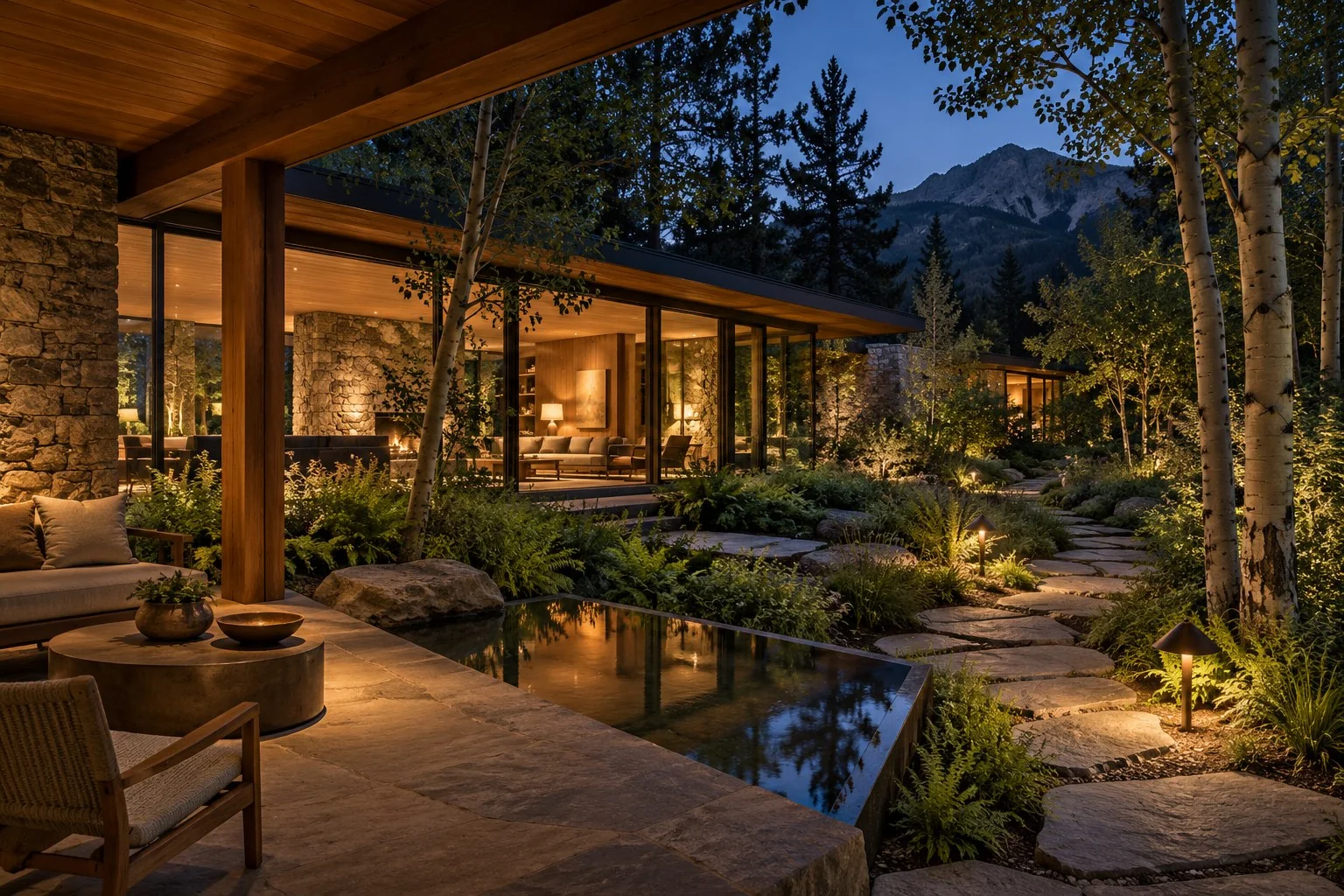
The garden, held in a little light.
A sheltered terrace, a quiet reflection, and a path that leads gently into the trees.
Design rendering
A garden you can move through.
A path needs enough light to make its direction and changes in level clear. Small, shielded fixtures can guide that route, while a softer glow at a terrace or seat offers a place to pause. Here, the planting, boulders, and tree trunks give the evening view its layers. A shallow pool holds reflections close to the house. The farther garden can fade into shadow, keeping a sense of distance and discovery.
Begin with the chair, the table, the room.
Inside, each layer of light has a purpose. A shaded reading lamp brings light close to a book; an opal table lamp softens a corner; the hearth gives a gathering place its warmth. Separate controls let those layers change with the evening. Mid-century fixtures contribute character through their shape and scale, while careful placement keeps the room comfortable for the person sitting beneath them.
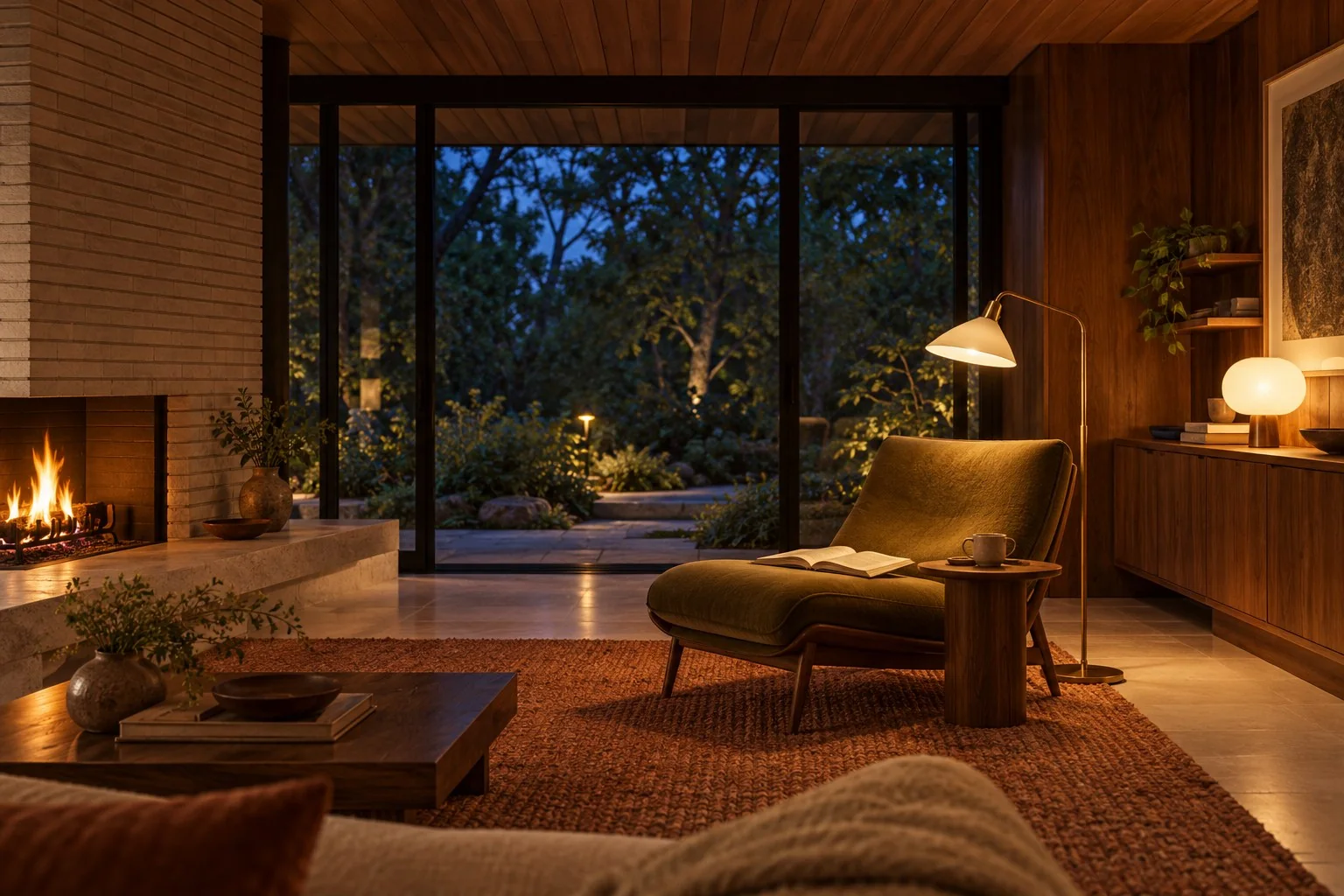
Light where life happens.
A reading lamp, a warm hearth, and a garden still visible beyond the glass.
Design rendering
Keep a relationship with the view.
After dark, bright interiors can turn windows into mirrors. We consider the balance on both sides of the glass: where a lamp sits, what it reflects, and which part of the garden remains visible. A small amount of light beyond the window can help the room continue outward. Views from a favorite chair and the route onto the terrace guide these decisions as much as a view of the house from outside.
Leave room for darkness.
The unlit spaces are part of the composition. Warm, shielded sources, modest brightness, and dimming help keep attention close to where it is needed. Timers and a quieter late-evening setting can reduce unnecessary light as the household settles down. We welcome collaborations with lighting specialists, electricians, and makers to develop these ideas around an existing home, a restored detail, or a new outdoor room.
Original lighting study
Explore an evening lighting direction for your home or garden, from a single room to the relationship between indoors and out.